Praying For Our Enemies
What the worst of us can teach us about ourselves

C.S. Lewis is my favorite Christian writer, even though I never cared for The Chronicles of Narnia.
Mere Christianity is my favorite of his works but today I’d like to quote from his assorted letters.
Praying for Our Enemies
“The practical problem about charity (in our prayers) is very hard work, isn’t it? When you pray for Hitler & Stalin, how do you actually teach yourself to make the prayer real? The two things that help me are (a) A continual grasp of the idea that one is only joining one’s feeble little voice to the perpetual intercession of Christ, who died for those very men (b) A recollection, as firm as one can make it, of all one’s own cruelty which might have blossomed, under different conditions, into something terrible. You and I are not, at bottom, so different from these ghastly creatures.” – C.S. Lewis, Collected Letters, 16 April 1940
First of all, what an insane premise: C.S. Lewis is struggling to make his prayers for Hitler and Stalin authentic, which is a pretty bold start presupposing he is praying for them, in England, in 1940.
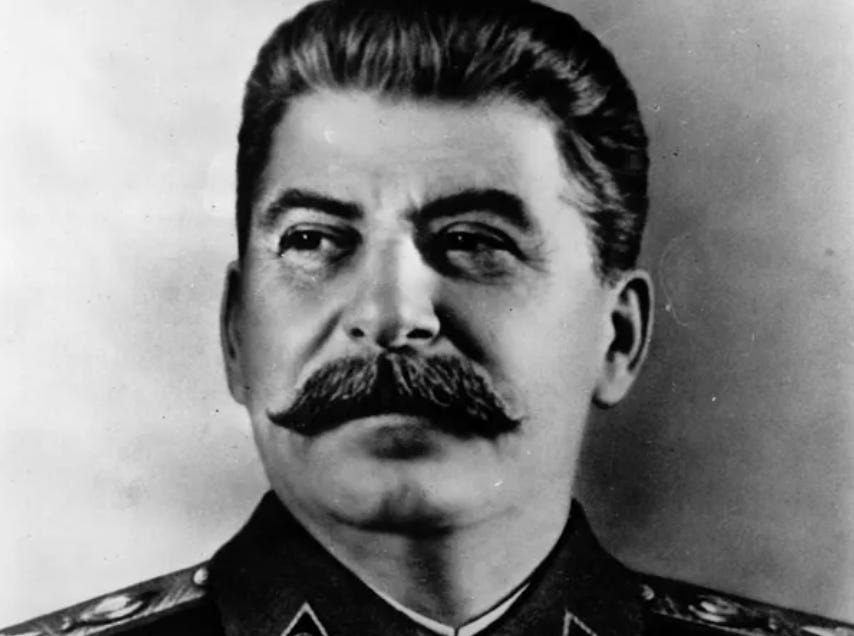
To C.S. Lewis, praying for Hitler and Stalin is an imperative because they are humans, and as humans, they represent some extension of our own humanity––or lack thereof.
I really admire this interpretation, because it helps us understand and accept evil in other men as an extension of our own creation and our own evil.
Personally, I lack the power to enact any evil. But how much evil do I presently tolerate or engage in? Less than some, I hope-–but more than others, I know.
Understanding myself as somewhere on a moral spectrum gives me the staggering loss of a binary position in the universe. It opens me up to acceptance, forgiveness, and growth.
But to understand how we work, sometimes it can be easier to understand how others do.
M.Scott Peck, another Christian genius of sorts (through the lens of psychiatry) believes that the evil person is one who avoids internal pain and discomfort at all costs. Instead of facing their own "sick self," they transfer the pain onto an external victim.
To that end, evil is the avoidance of the truth, as difficult as those truths can be. And through that lens evil becomes something to pity as much as it is something to scorn.

Personally, I find it instructive to notice how unhappy the ‘evil’ people in our world are. Donald Trump and Elon Musk, for example, are whiners. They are further from God, and thus from happiness, than anyone you know.
They follow what they wanted to their logical extremes and have everything anyone could want. Wanting, having, and wanting more beyond any law or limit.
How’s that going for them?
How’s that going for us?
In 6th grade, we had a rabbi visit our class to talk about morality.
As I remember it, he had a xeroxed copy of an article from The New Yorker about a wealthy man who abruptly took a vow of poverty and gave his wealth to the poor.
We discussed the morality of this giving, and how good it was that he did this.
And then the rabbi at our expensive private school asked if our families should undertake the same oath.

People lost their minds. A few girls started crying, angrily defending their families wealth. I remember Alison specifically getting upset: her family worked hard, she explained. It was their money.
The rabbi gently tried to explain that hard work did not correlate to pay; that we students worked hard in school for no pay, that our teachers worked hard for low pay, that some people made money without working, by luck or chance or by owning the companies in which other people worked hard.
Without morality, without clarity, why shouldn’t we give our money away he asked?
I remember raising my hand, and answering before I was called on.
“Because we don’t want to, right?”
The rabbi gave me a sad smile and nodded.
“Because we don’t want to,” he agreed.
It was kind of a mean class to give a bunch of rich 6th graders, but it was one of the best I ever had.
This is not a story of how much cooler and more moral I am than Alison: this is a story about want.
The cliche is that power corrupts; but I believe that power empowers. It gives juice to our wants, which is the last thing we should ever want.
Enter the God of it all––and the prayer we must make for our enemies.
The koan of wisdom, which is the center of Buddhism, is that our wants drive our unhappiness. Therefore our power propels equal unhappiness.
It is no coincidence, then, that many religions including Islam (translated as “submission”) preach freedom as freeing oneself from the wants that contradict our inherent truth, our souls, our God.
And there is no better example than our enemies.
At the risk of making this piece controversial, picture your enemy: hold their incoherent and contradictory beliefs, framed on fear, clinging tightly and desperately to excuses they can’t possibly believe, choosing ignorance and reducing their souls to some inconvenient part, locked in the pain of subconscious protest that manifests itself in true, constant unhappiness––that they then try to satiate with more wants, further deepening the cycle.
These people are afraid. They are unhappy. They are tied up by wants that contradict the true needs of their souls.
And those people are me! I, your dear friend, am also your enemy!
You may have already known that part.
But did you know you yourself are too?
For this sake, by praying for our enemies we pray for ourselves. By understanding them, we can demystify them.
We have no hope in “defeating” evil in some debate, or some other external fantasy. But in understanding the truth of that evil, and how close that evil lies to our own hearts, we can understand and heal some dark and distant part of ourselves that follows the same path.
It is to that end I’ve always been a little too indulgent in hating evil in the world. I mean, how mad did I get on Twitter?
For me, evil as an enemy affirmed my own ego as good––but more importantly, my ego as someone “correct.” As long as I externalized evil to the “other” I was safe.
In praying for our enemies, in making “peace” with evil, we can make peace with our own evils and grow.